
Knee Replacement in Grand Rapids, Michigan
Your Knee Shouldn’t Set the Limits
If knee pain is limiting how you move, work, or sleep, OAM’s fellowship-trained knee replacement surgeons perform total and partial knee replacement as an outpatient procedure for most patients.
When to Consider a Knee Replacement
Most people arrive at knee replacement after other approaches stop working. The signs that tend to bring patients in:
- Pain that no longer responds to medication, rest, or activity changes
- Having to give up or modify activities you want to keep doing
- Mechanical symptoms such as clicking, catching, or a knee that feels unstable
- Pain that interrupts sleep or makes daily movement hard
There is no age requirement for a knee replacement. Our surgeons treat joint health individually and care for patients of all ages, because the condition of the joint matters more than a number. If you have been told you are “too young,” that is a reason to ask, not to wait.
One thing our surgeons want patients to know: a knee replacement is not a quick fix, and it is not the only tool available. There are ways to control knee arthritis pain without surgery, and those are worth trying first.
Conditions That Lead to a Knee Replacement
Several conditions can wear a knee down to the point where replacement helps. Each one has its own page if you want to read further.
Total Knee Replacement vs. Partial Knee Replacement
Whether you are a candidate for a partial or a total knee replacement comes down to how much of the joint is affected and how much deformity is present.
A total knee replacement is usually the answer when arthritis affects more than one part of the joint or when there is meaningful deformity to correct. The worn surfaces of the joint are resurfaced and the knee is balanced with your own ligaments.
A partial (unicompartmental) knee replacement may fit when arthritis is limited to a single compartment of the knee and the rest of the joint is healthy. Only the worn compartment is resurfaced; the healthy cartilage and ligaments around it are left alone.
This is a decision you make with your surgeon after imaging and an exam, not something to settle from a web page. During surgery itself, the goal is the same either way: resurface the worn joint and use your own ligaments to balance the knee back toward how it moved before arthritis set in.
Alternatives to Knee Replacement Surgery
Before recommending surgery, our surgeons want to see conservative care fully explored. Depending on your situation, that can include:
For many people, these hold symptoms at bay for years. Surgery becomes the option when they no longer do, and when pain is limiting the life you want to live. If you are early in that process, an OAM surgeon can help you map out what to try first.
What Happens During Knee Replacement Surgery
Most patients follow this general path to knee replacement.

Consultation
Your surgeon assesses your pain, function, and how much daily life has been affected, then reviews what conservative care you have already tried. Together you decide whether surgery is the right step.
Surgery
A knee replacement takes about an hour under anesthesia. The surgeon opens the joint while preserving as much muscle as possible, resurfaces the worn areas of the knee, and balances the joint using your own ligaments so it moves the way it did before arthritis. Most patients go home the same day, with the option to stay overnight if needed.
Minimally Invasive, Muscle-Sparing (Subvastus) Options
You may have seen advertising for a “jiffy knee” or muscle-sparing knee replacement. At OAM, several of our surgeons offer minimally invasive, muscle-sparing approaches, including the subvastus technique, which works around the quadriceps muscle rather than cutting through it. Whether this approach fits depends on your anatomy and is something to discuss with your surgeon.
Robotic-Assisted Knee Replacement
OAM offers robotic-assisted knee replacement, and it helps to clear up what that means. The robot does not perform the surgery. Your surgeon does.
It is a tool that adds precision to implant placement and lets the surgeon read your soft tissue objectively while balancing the joint. Robotic assistance is one option within our group, not a requirement, and not every OAM surgeon uses it.
Knee Replacement Recovery Timeline
Recovery is different for everyone, and many patients move faster than the timeline below. As a realistic guide:
The most intensive stretch. You will work hardest with physical therapy on range of motion and strength, and pain management is most active here.
Our surgeons set a three-month target, meaning the goal is for you to be better than you were before surgery by that point.
Strength and comfort continue to improve as you stay with your program.
The single biggest factor within your control is the work you put in. Patients who do best tend to prepare before surgery (prehab and strengthening), go in with a positive mindset, and stay diligent with range-of-motion and strengthening work afterward.
How Long Does a Knee Replacement Last?
Modern knee replacements are built to last many years, and for most patients a well-done replacement serves them for the long term. Because implants can eventually wear, surgeons often counsel younger patients on timing, since a knee done earlier in life is more likely to need attention later. Your surgeon can give you a picture based on your age, activity level, and the type of replacement.
Where Your Knee Replacement Happens
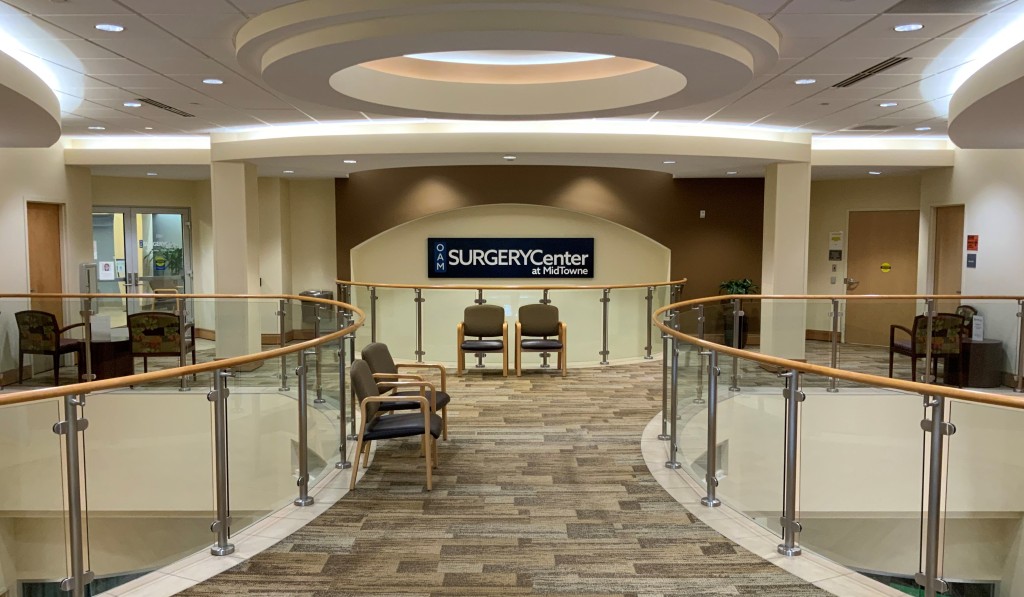
Consultation appointments can be scheduled at any of our physician office locations. If surgery is necessary, most are performed outpatient at the OAM Surgery Center.

Leffingwell Campus
Grand Rapids, MI 49525
Wyoming
Wyoming, MI 49519
Greenville
Greenville, MI 48838
Why Patients Choose OAM’s Knee Replacement Surgeons
Fellowship-trained knee replacement surgeons.
Not every surgeon who performs joint replacement trained specifically in it. OAM’s knee replacement surgeons are fellowship-trained subspecialists for whom this is the focus of their practice. New patients who book through our site are routed directly to one of them.
Volume that reflects focus.
As a group, OAM’s surgeons perform hundreds of joint replacements each per year and thousands together.
Outcomes we can show you.
OAM tracks patient outcomes over time through independent surveys at 3 months, 6 months, 1 year, 5 years, and 10 years.
Personalized, private-practice care.
As a private practice, OAM keeps fewer administrative layers between you and your surgeon. Your care team is reachable, and the people who plan your surgery are the people who see you through recovery.
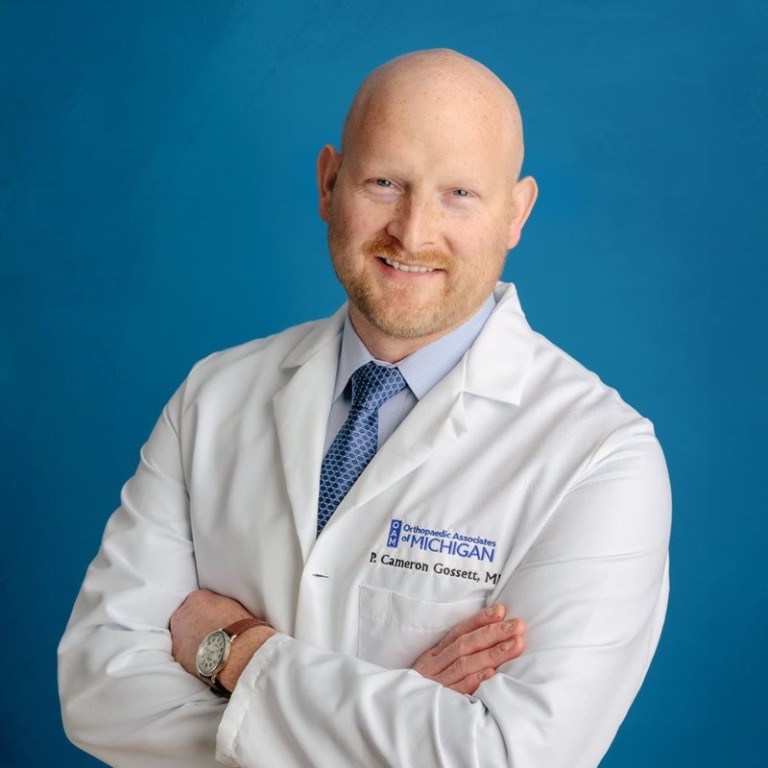
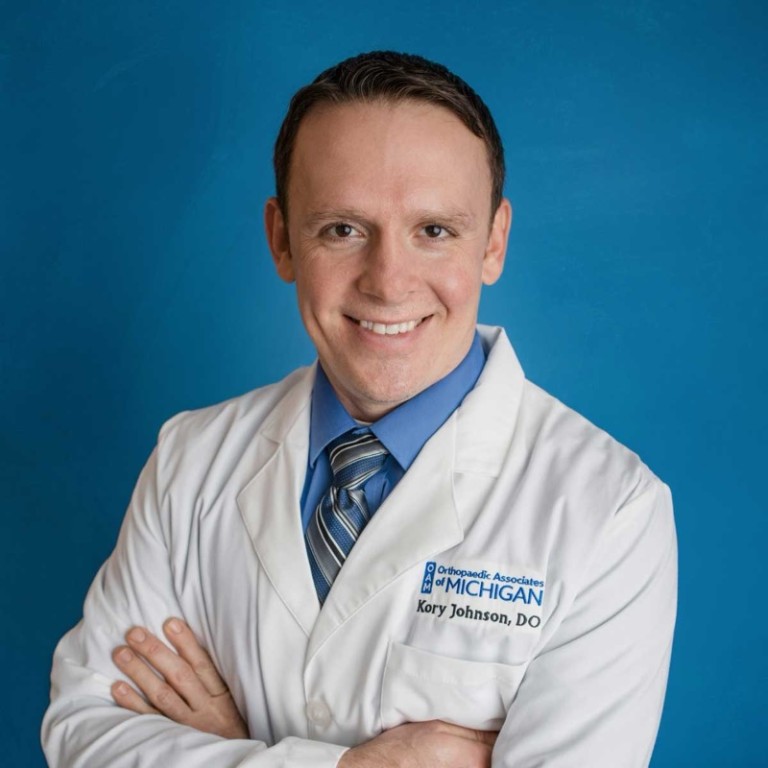
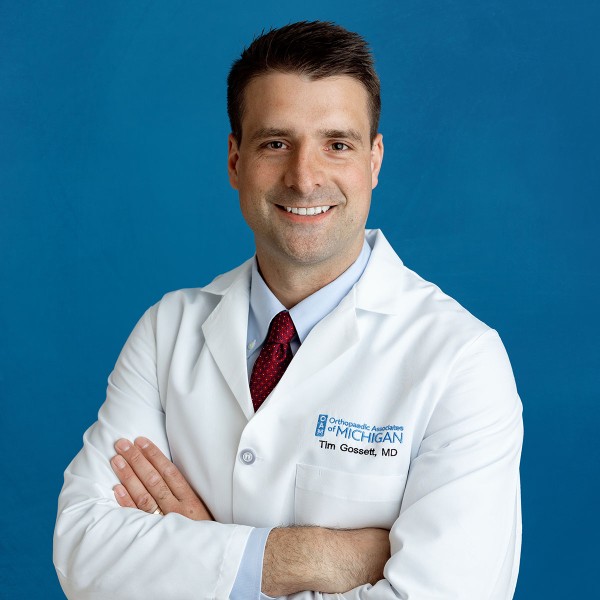
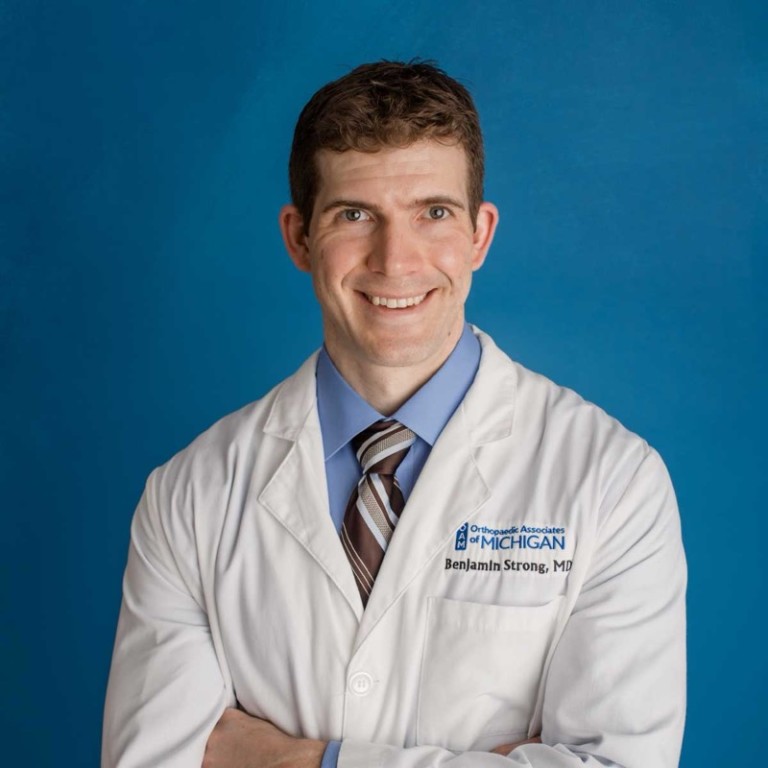
Meet Our Knee Replacement Surgeons
Fellowship-trained joint reconstruction subspecialists performing total and partial knee replacement across West Michigan.
Common Concerns Before a Knee Replacement
Yes, you are anesthetized for the procedure. Your care team walks you through what to expect.
It depends on your job and your recovery, and your surgeon will give you a realistic estimate for your situation.
No surgeon can guarantee an outcome, and some knees done elsewhere do not go well, which is part of why choosing a fellowship-trained joint surgeon matters. OAM’s outcomes tracking is how we hold ourselves to a standard rather than a promise.
Getting back to activity is the goal for most patients, and it is a large part of why the pre-surgery and recovery work matters so much.
Frequently Asked Questions
How do I choose a knee replacement surgeon?
Am I a candidate for a partial or total knee replacement?
Is there an age limit for a knee replacement?
What are the alternatives to knee replacement surgery?
What happens during knee replacement surgery?
How long does knee replacement recovery take?
How long does a knee replacement last?
Meet With a Knee Replacement Surgeon in Grand Rapids
Ready to talk with a fellowship-trained knee replacement surgeon? New patients can schedule online, or call 616-459-3900.